A letter from the project · 11 November 2026
Many places.
One Chennai.
Research, films, a game and a world to explore. An ongoing attempt to understand the city I call home.
After Madras Day, I found myself asking what was already here before the familiar story of 1639. I wanted a picture of how Chennai accumulated: its settlements, waterways, work and people.
I started reading. Then drawing, making films, building a game and assembling a historical world. The forms kept changing because each let me ask something different of the city.
A kolam can carry a story through a line. A game can make someone stop at a record. A world lets them look from a beach towards the houses and ask who lived there.
I want the work to feel recognisable to someone who knows Chennai, and inviting to someone who does not. I want curiosity to survive the first beautiful image. If someone asks, “How do we know?”, there should be a source to follow and room to disagree.
That is what I am trying to make with The Madras Project.
Vinay
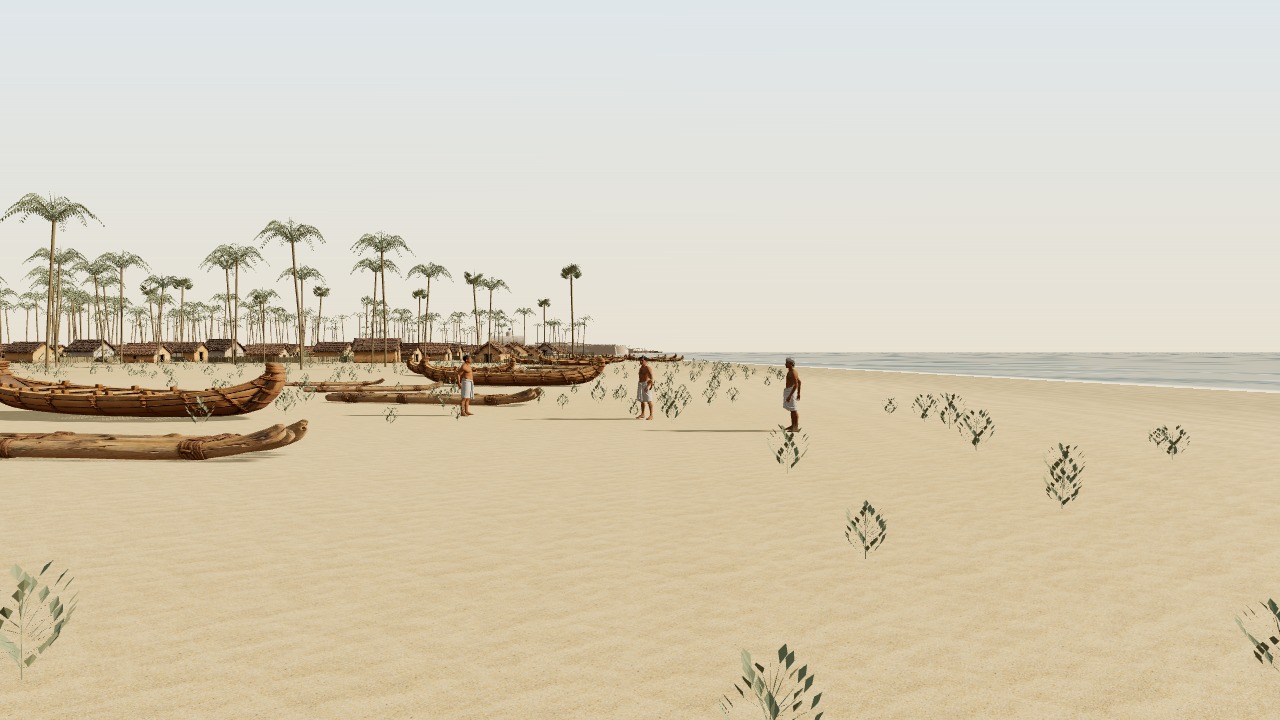
I · The work
Four ways into the city
More from the studio
The early Madras Project YouTube channel brings the films and ongoing explorations together. It is another way to follow what I am making as the project finds its own home.
II · The making
From a source to something you can see
I use AI to help read, organise research, write code and make assets. I set the questions and direction, examine the results, and decide what is ready to share. The films, game and world have separate implementations. The historical world is the foundation I want to reuse for more views and experiences.
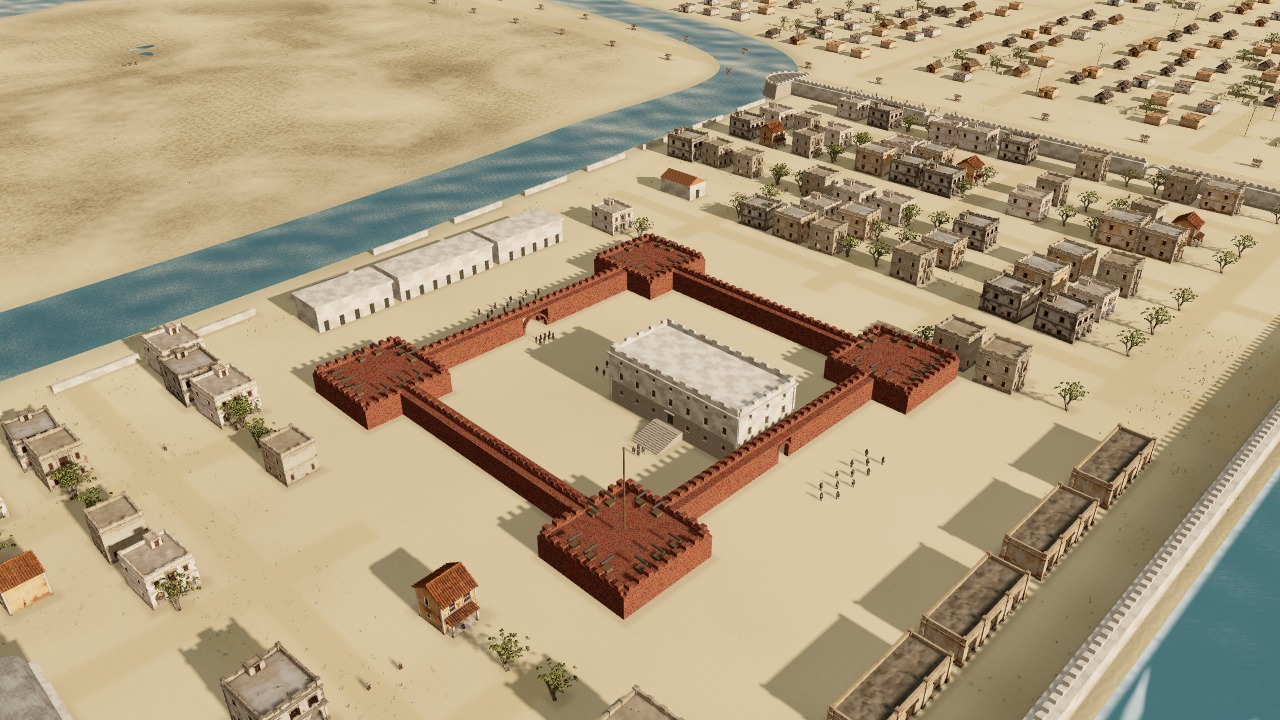
01Buildings: an image is only a beginningDifferent meshes can come from the same drawing. They still need inspection.
Some assets begin as generated images and are converted into meshes. Other geometry, including the fort, is authored directly. Code controls where things sit and when they appear. The process varies by asset.
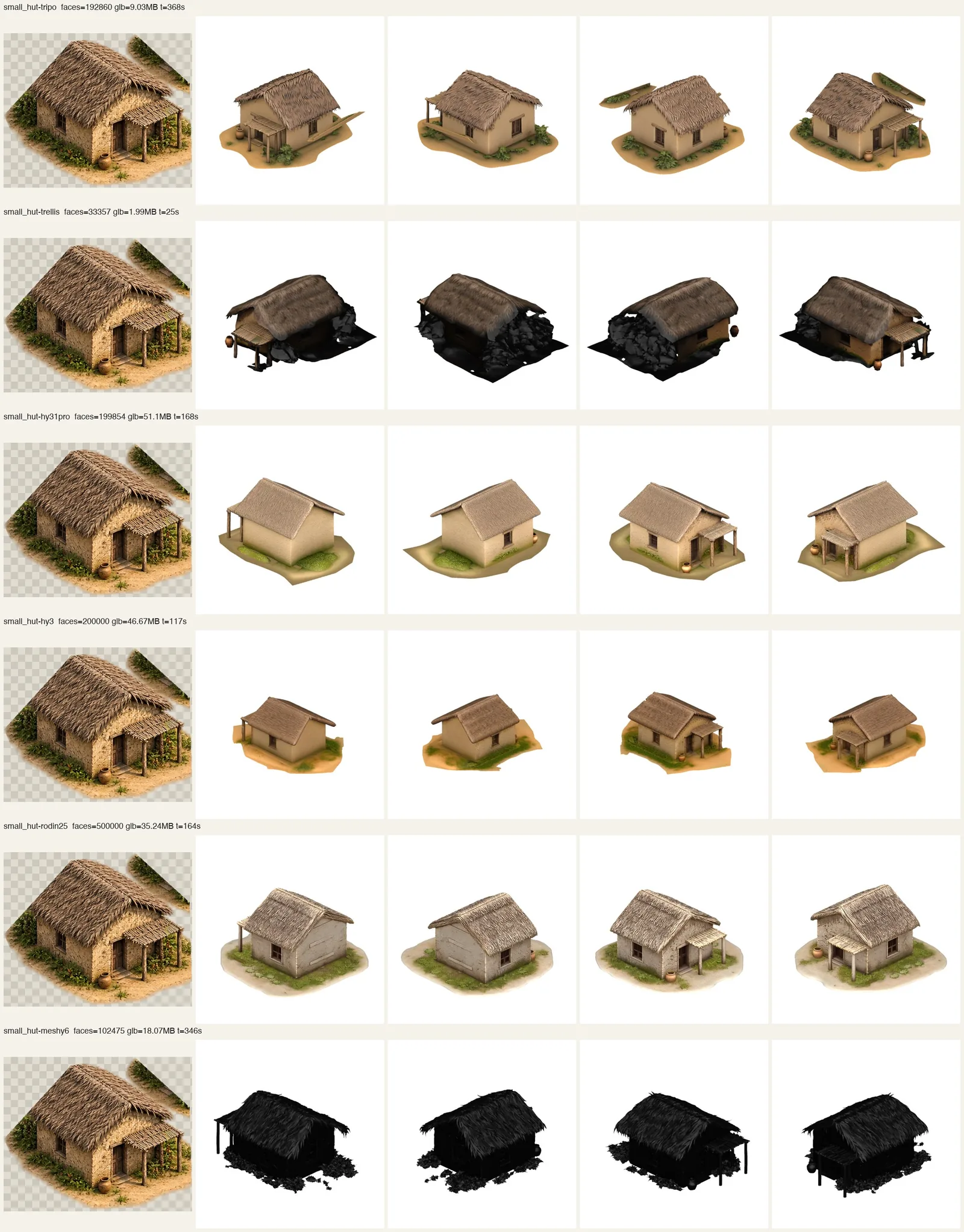
The useful question is whether a building belongs in the scene, looks right from more than one angle, and can be explained. A successful conversion does not answer all three.
02Characters: what can we honestly show?The record can support an occupation without telling us a person's face or clothes.
The project separates documented features, reasonable inferences and illustration. For example, a character walking between home and work is an interpretation of daily life. The precise individual, route, costume and time of day are not established.
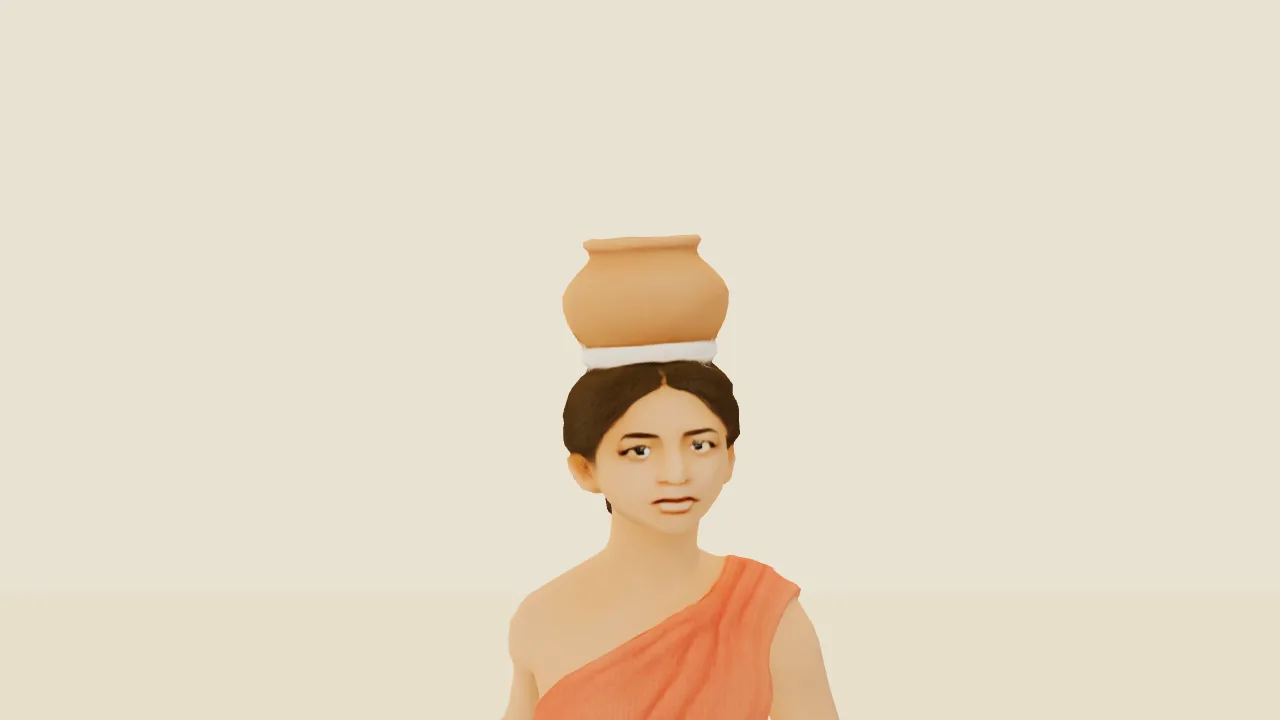
This is why I want a visitor to be able to ask about the evidence behind a scene. The illustration should invite a question, not hide the uncertainty.
03Rigging and motion: watch the whole personA convincing still can hide a broken walk. Movement needs its own review.
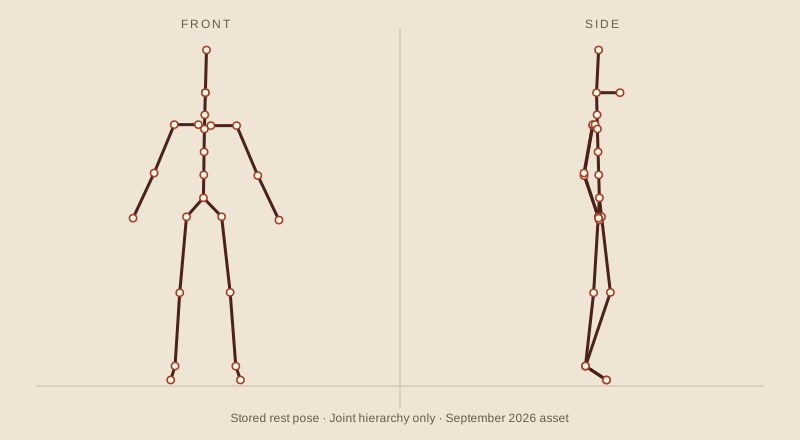
A rig gives a mesh a joint structure so it can move. In the early boatman experiment, animation was transferred to the character in Blender. The diagram below comes from that actual rig file; it is a production artefact, not an anatomical or historical diagram.
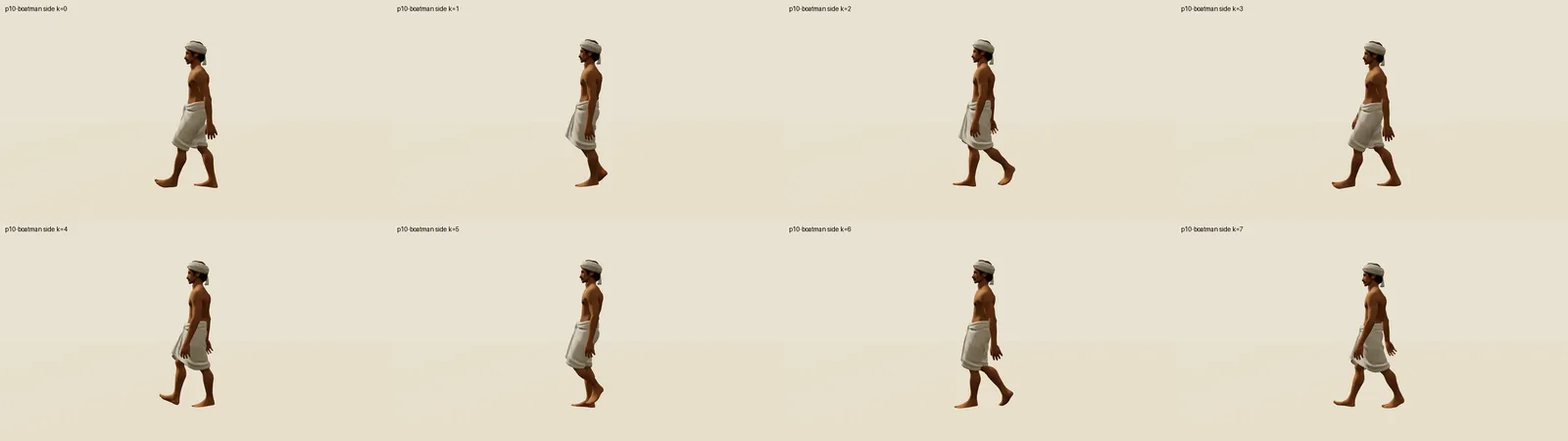
A later net-mending experiment became trapped in repeated repairs. That version did not pass review and was left out of the published visit. The lesson was to review the whole moving body and the visitor's experience, and to stop a failed experiment from holding up a bounded release.
III · Research notes
Three questions I keep returning to
The research began as ten notes. These are the threads I would keep in the foreground. Each has a source and a limit.
What was here before the familiar beginning?Madraspatnam already existed before the English settlement.
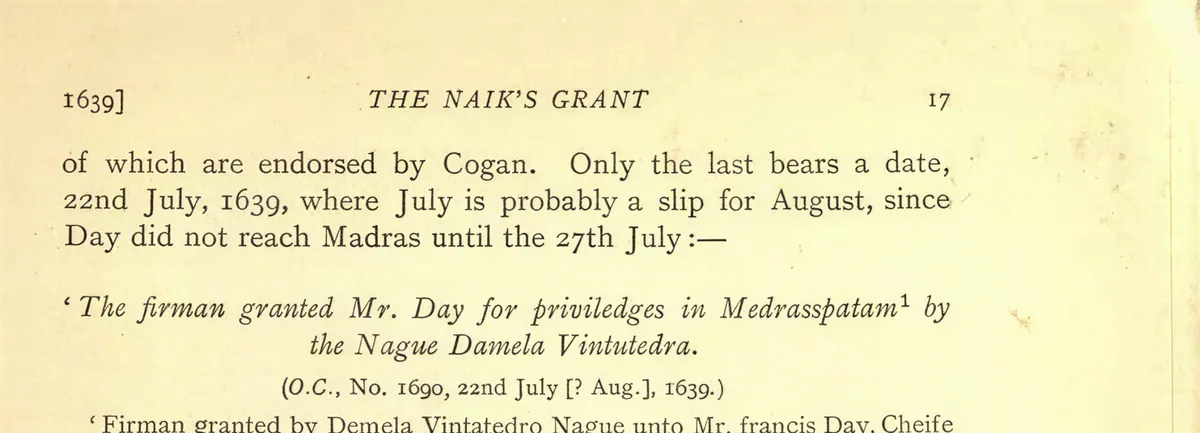
What does the date on the page actually say?Love prints 22 July 1639 and questions it. The interpretation needs to stay visible.
On page 17 of Vestiges of Old Madras, H. D. Love says only the last of the copies he discusses bears a date. He prints 22 July 1639, then suggests that July may be a slip for August. In 2023, V. Sriram argued for the July reading and described the copies differently.
My earlier note compressed those accounts into one confident statement. They should be attributed separately. This page does not resolve the date of the original grant.
Can today's map stand in for an earlier city?Waterways and built places have changed. Each date needs its own evidence.
Follow the historical sources linked within these notes for deeper reading. The detailed working archive is private. Models can help find questions. Agreement between models cannot establish a fact.
IV · The public ledger
The decisions that changed the work
Selected milestones and lessons. The detailed session records remain the working archive.
A picture became a questionAn early Madras Day image exposed how easily a convincing picture could get the city wrong.
A world assembled from partsPlacement moved into code. Buildings, water, terrain and cameras could be revised separately.
People changed the testWatching the scene move revealed problems that attractive stills and numerical checks had missed.
Mylapore enters the gameMadras Rush's published update adds a Mylapore route and a kolam of the ride.
Stop the repair loopThe net-mending experiment remained unresolved. It was excluded so the guided visit could move forward.
A visit people can tryThe desktop preview was published with coast, settlement and fort views, three dates and a reading option.
The project meets a new readerThe New Indian Express features the work. It is a moment to explain the purpose, process and next steps more clearly.
V · What comes next
More ways to follow your curiosity
I want visitors to move closer, notice how people worked and understand how the city changed. Conversations with characters, building entry and role-play belong to that longer ambition. They need clear boundaries between recorded history, interpretation and imagined dialogue.
The next step is to make the existing visit easier to understand and use, invite corrections, and choose the next interaction around what a visitor wants to discover. I want the evidence to become easier to inspect as the experience becomes richer.
Over time, I would like useful parts of the method and work to be reusable for other places. An open-source release is an intention. A complete public toolkit and blanket reuse licence are not available yet.
VI · Questions
A few things worth making clear
Are you a historian?
How accurate is the world?
What did you make, and what did AI do?
Can I talk to characters or explore freely today?
Is this a Layerpath product? What is the business model?
Can I reuse the work?
How much time and money has it taken?
How can someone help?
A note of thanks
To Sonu
Thank you for taking the time to listen and for writing about the project in The New Indian Express, online and in print. Seeing the work through your account helped me understand what I had communicated and what needed more explanation.
I had promised a write-up and FAQ and did not get them to you in time. This letter is a start. I am grateful you made room for the curiosity behind the work.