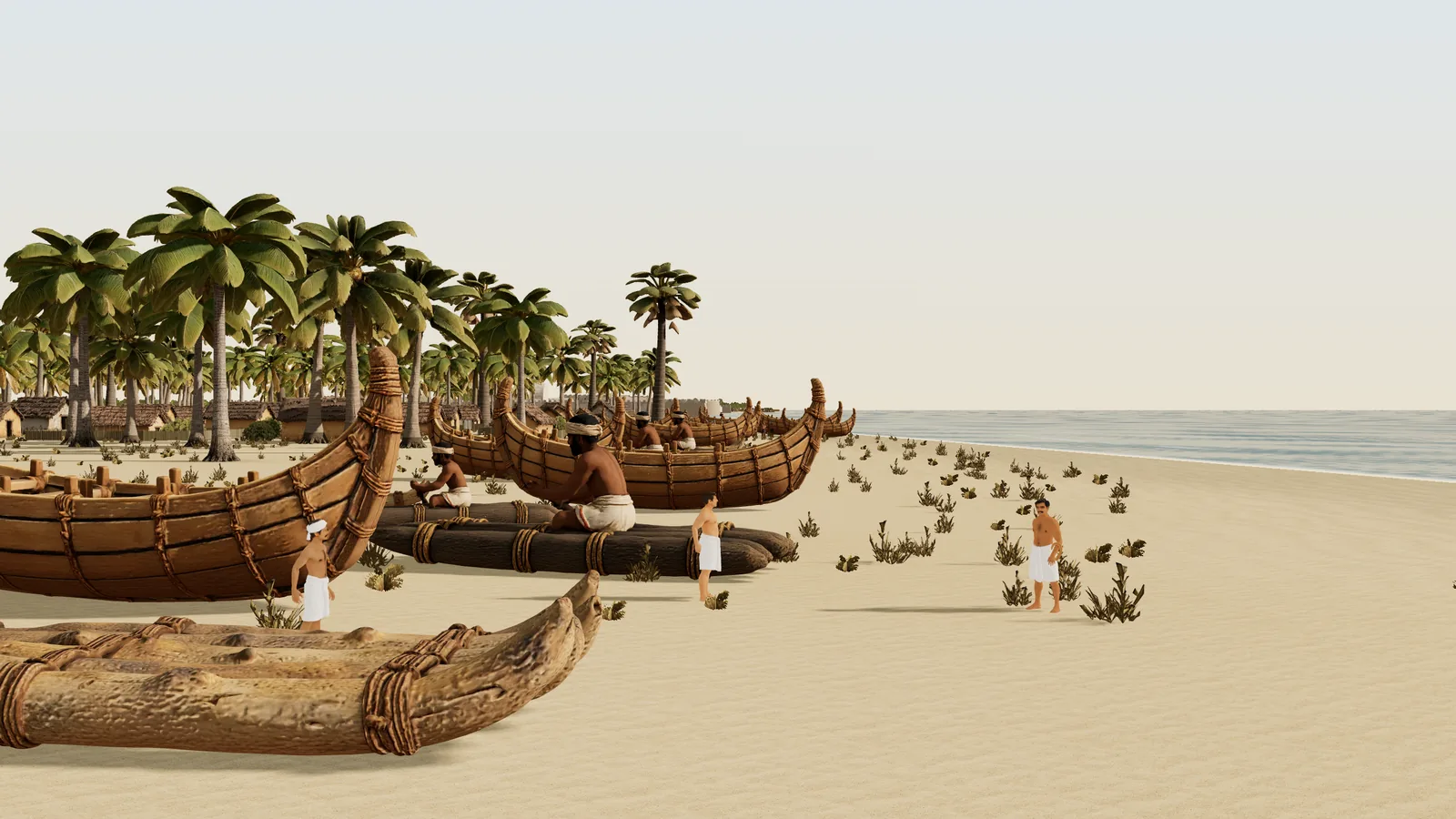
Five people on the beach, and the men who lit themselves
The second phase judged from where a visitor stands: two more men, still feet, matte backs, a plume that reaches the sky, five judge errors, and the reason the figures never looked like the men beside them
Phase 11 was the second phase judged from the ground. The four aerial cameras were held again, and every number on them came back where phase 10 left it, for the eighth phase running.
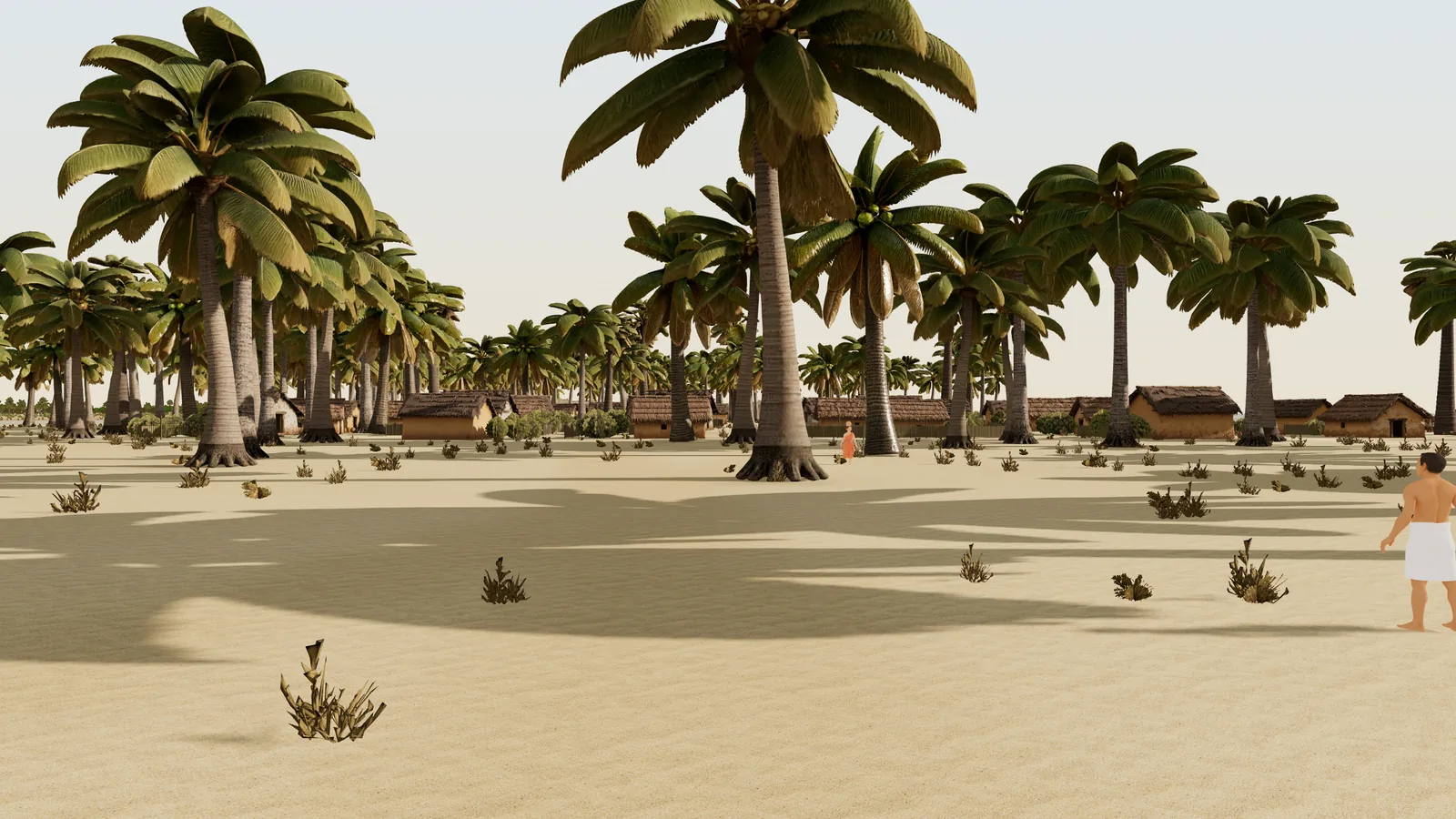
The brief asked for six things at the beach and the lane, all of them repairs of rules the judge had got wrong the phase before. The boatman's path was to move to open sand. The idle men were to stand still on their feet. Every shadow was to be measured where the figure is nearest the camera. The men modelled into the log rafts were to lose their shine. The smoke was to reach the sky. The three figures' colours were to be matched to the sheets they were drawn from. And up to three more people could enter, but only from a written matrix of what the sources say people did on this spit, and a dossier per figure that names its source or says "not established" for every row. The implementer wrote the matrix, seven rows, chose two, declined to invent a third, wrote the two dossiers, and I authorized the eight paid jobs myself. A lane boatman now walks the lane toward the town on a line just east of the woman with the pot, so the lane has two-way traffic. A shore crewman stands on the beach with empty hands, because the sources put boatmen on this beach between passages and the clip library has no boat-handling clip, and the matrix says so.
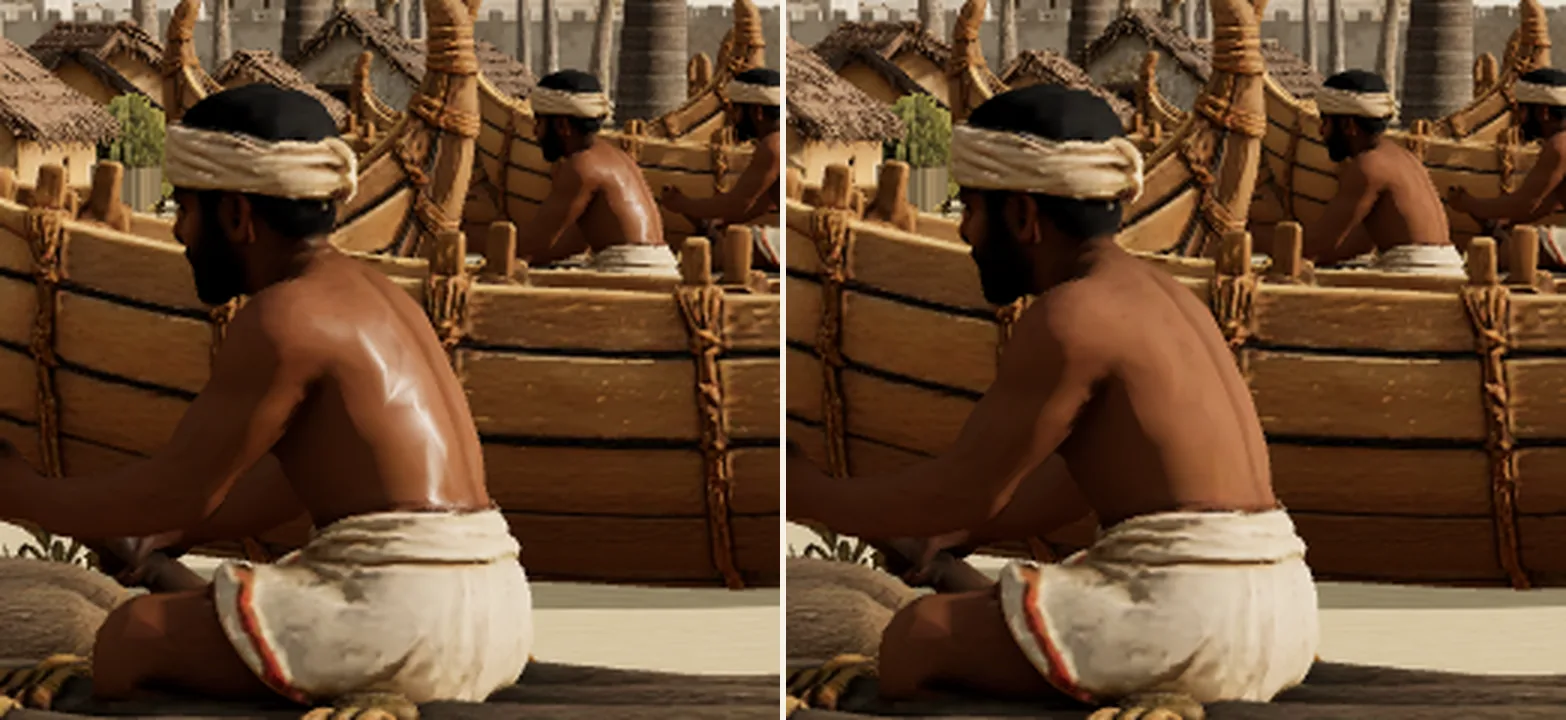
Everything the implementer measured, the judge re-measured, and every number matched to the digit: the idle feet at zero, the shadows to the pixel, the smoke to the pixel, the skyline to the pixel, the colours to the hundredth. The judgment held the aerial score at 8.0 and gave the second eye-level score: 6.6 at the beach, 6.2 in the lane, up from 6.2 and 6.0. Then it found five faults, and again they were the judge's own. The boatman's new path clears every raft on the sand by a metre and a half, and from the camera his legs are behind a raft, because a clearance is a line of sight and the judge had measured distances. The new man in the lane starts one degree inside the frame's edge, half out of the picture, because a frame has edges and the placement rule did not look through the lens. The gate on the seated men's shine counted bright pixels in a box that holds a white cloth in the sun; the shine itself is gone. The colour rule matched each figure's texture to a swatch on its lit drawing, so two men came out paler than the men four metres away, because a lit drawing is not a surface colour.
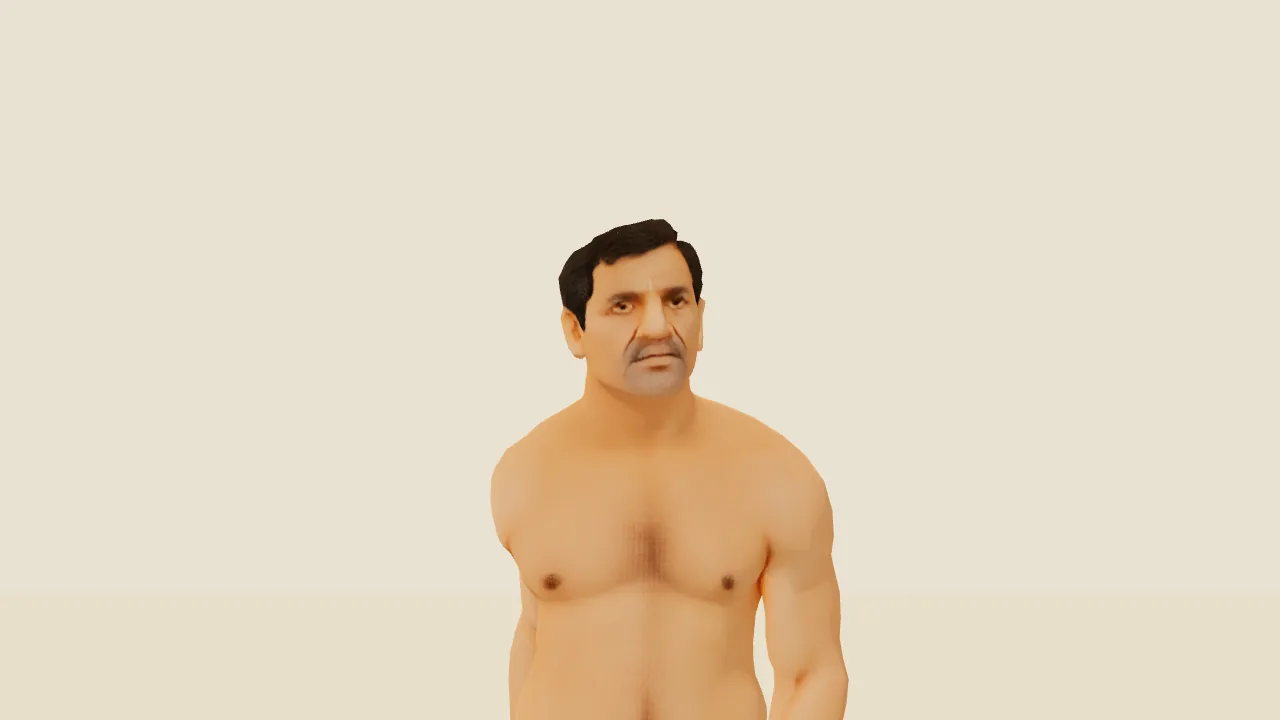
And under all of it, one thing that explains two phases of judgments. Every animated figure's material carries an unlit copy of its own colour, added on top of the lit one, and a doubled shine, written by the rigging step and carried through every export since the first proof in phase 09. The figures have been lighting themselves. That is why they read lighter and flatter than the men modelled into the boats, why a roughness rule did nothing to them, and why changing their colour maps in phase 11 moved the picture by four percent. Nobody read the material past the one field the rule named. It is a one-line fix in the viewer, and it is the first thing phase 12 does.
Phase 12 turns off the figures' self-light, judges their colours in the frame beside the seated men rather than against a drawing, moves both walkers to lines the cameras see whole, puts their soles on the sand, counts the shine as shine, and finds out what actually costs time at camera F before building anything for it. No new person until I have read the plates that show what these boatmen wore.
- D-2026-09-16-01, phase 11 judged
- D-2026-09-16-02, phase 12 controls
- D-2026-09-16-03, the generation ledger