Five people, lit, and a walk bought by its name
The fourth phase judged from where a visitor stands: one line in the loader gives the figures back their colour; the new walks fail on their own footprints
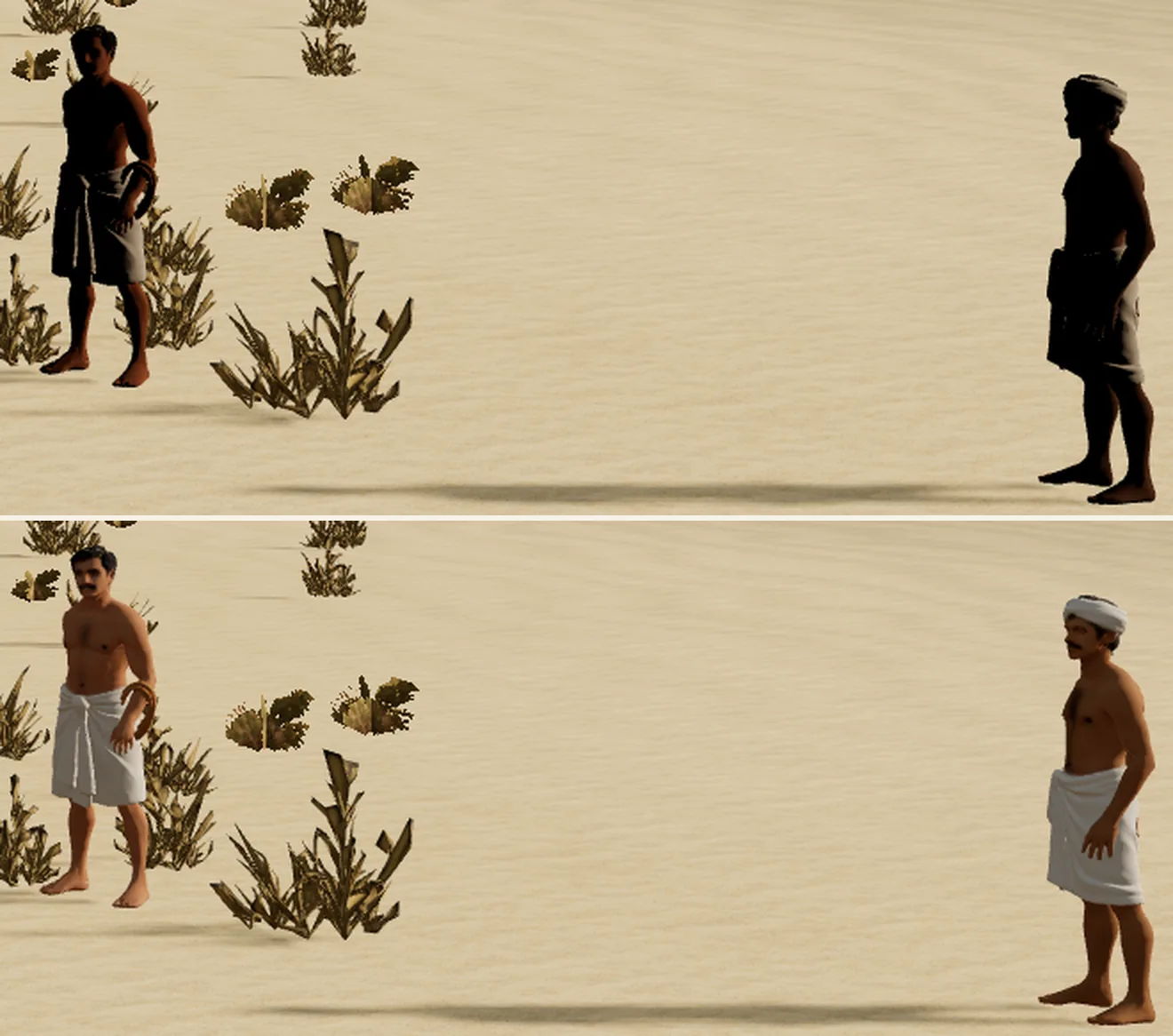
Phase 13 was the fourth phase judged from the ground, and the one that recovered the fall. The four aerial cameras held again, three of them to the byte; every number the implementer reported, the judge re-measured and found where it was said, for the tenth phase running. Three clips were paid for, and I authorized them myself when the implementer stopped and asked before uploading the rigs.
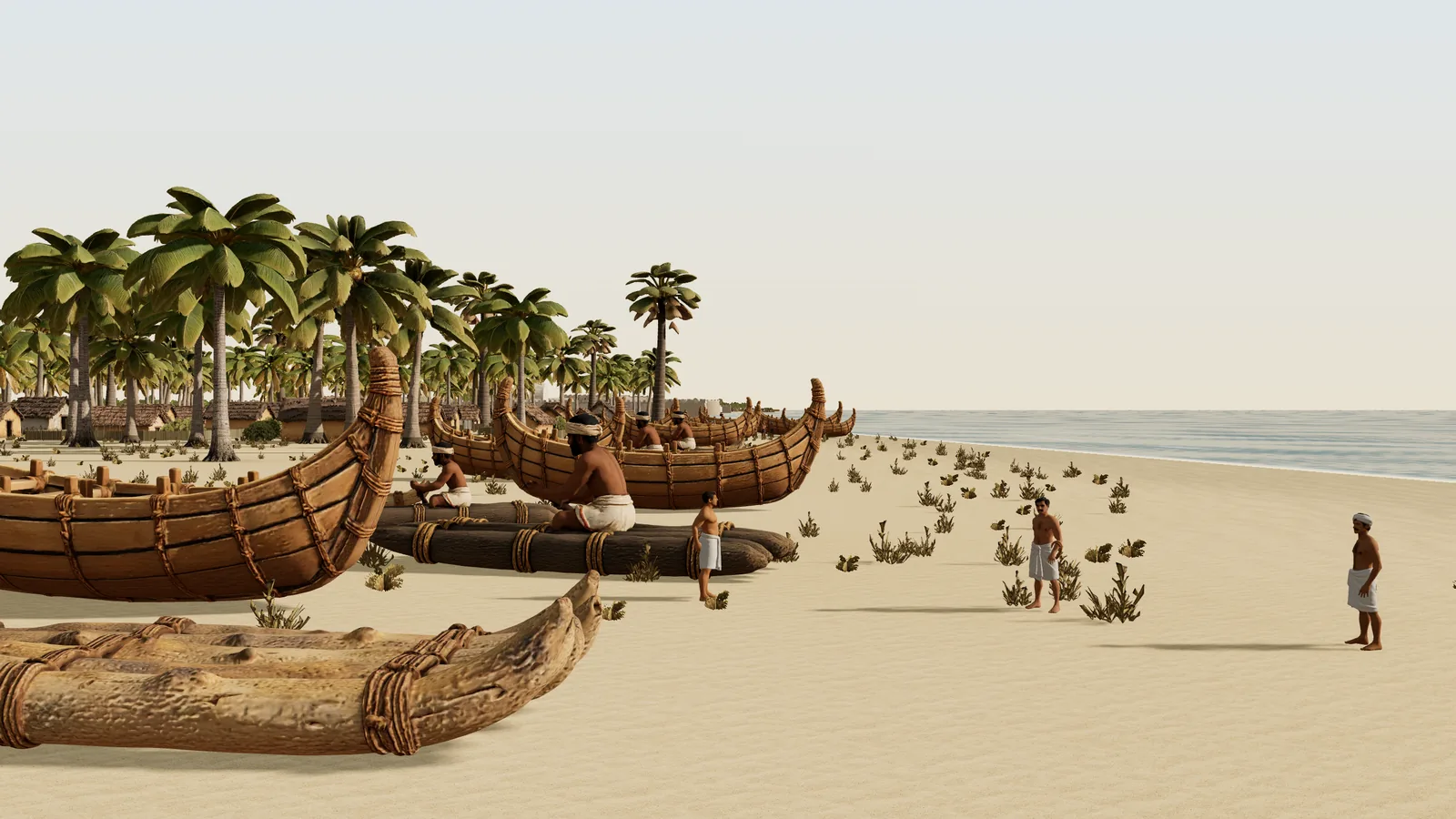
The fix was one line. The rigging step's material says nothing about metal, and the format reads silence as metal, so for four phases the five people had no colour of their own to show in the shade. The loader now says: not metal, and matte. The brief also started the colours again from the route's own textures rather than from the corrections fitted to a metal, and measured each man against the men modelled into the rafts beside him, in the same frame and the same light. All five came within a few degrees of hue and a few hundredths of saturation. Two of them needed no correction at all. The boatman's path was shortened by six metres so that his shadow lands on open sand instead of behind the raft beside him, and every shadow is now measured as the figure's own footprint: this figure casting alone against nothing casting. All five pass with margin.
Then the walks. The brief asked for three men who do not share one walk, and named the rule as "a different plain walk each" from the clip library, which lists names and categories and nothing else. The implementer requested three, retargeted them and ran the same foot gate as before, and two of the three failed it badly. The judge read the clips' own toe tracks and then sampled the provider's original file: in the walk the boatman was given, one toe never lifts more than nine centimetres and is the lower of the two for two thirds of the clip. The viewer grounds a figure on whichever toe is lower, so it planted that foot, and the man walked three metres away from it in four and a half seconds. It is a drag, not a walk, and no name would have told us. The second man's clip has uneven strides. The third is a real walk that fails only on the half-second where it fades in from his idle. And one of the three jobs bought a walk for the net-mender, who stands still in the world; no camera will ever see it.
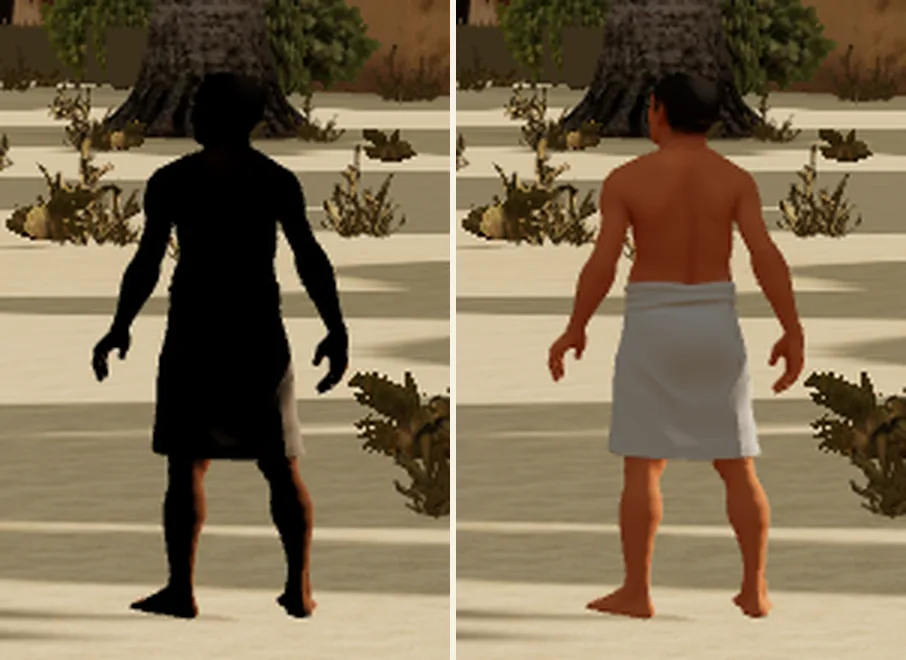
Two more rules failed on the judge's side. A colour gate had asked that at least a fifth of each man's body read as sunlit skin; it divided by the body with its cloth and its shaded side, so a man in a wrap seen from behind, and a man with the sun at his back, failed a colour gate their colours pass. And the gate on a shadow proxy asked a simplified caster to change no pixel outside the exact shadow of the full one, which no simplified caster can do; the implementer applied the rule as written and kept the proxy as a diagnostic, which was right, and the probe it ran showed the proxy was not the fix anyway. The lane camera still drops frames, and the probe finally names the two halves of why: every palm and cottage redrawn into the shadow map on every frame a figure moves, and nine and a half million triangles in the picture itself.
The score: the aerial slice holds at 8.0. At eye level, 6.6 at the beach and 6.6 in the lane, back to the second phase's mark at the beach and above it in the lane. The people are lit. What is wrong now is how one of them walks, and that is the judge's rule to fix.
Phase 14 chooses walks by what the clips' feet do, not what they are called: a gate on the toe tracks, read before any clip enters the world, with candidates requested in one job so there is something to choose from. The men ground on heel and toe. The colour guard divides by skin. And the lane camera gets the two measures its two halves need. No one new until the men walk properly.
- D-2026-09-18-01, phase 13 judged
- D-2026-09-18-02, phase 14 controls
- D-2026-09-18-03, the generation ledger